Melasma is characterized by patches of discolored skin on the face that are darker than your natural skin tone. And once it appears, it really likes to stick around.
Because it's so notoriously tricky, conquering melasma may feel a little David-meets-Goliath. That said, if you remain diligent with these dermatologist-approved strategies, you can win the war and restore your glow. But first: Let's get into the what, where, and why of melasma.
What is melasma?
Melasma is a common form of hyperpigmentation (overproduction of skin pigment). It is typically set off by either hormonal changes—namely by a rise in estrogen levels, which can occur during pregnancy or when you take birth control pills—or from excessive, unprotected UV exposure.
It appears as uneven blotches of darker skin on your face. It typically pops up on the forehead, bridge of the nose, cheeks, chin, or above the upper lip like a shadowy mustache.
While hormonal changes can trigger melasma, sun exposure fuels its persistence, making the condition often chronic and challenging to manage. It can take 2 to 3 months of diligent treatment to fade a melasma patch, but a single day out in the sun without sufficient SPF protection to bring it all back.
What causes melasma?
Whether or not you develop melasma is often determined by your genetics. About 50% of melasma sufferers report a family history of the condition. However, where you’re from matters too, as people who live in areas of the world with high sun exposure tend to be more prone to melasma.
The condition is more common in darker skin tones, Asian skin, and people of Mediterranean descent. And women are 9 times more likely to develop it than men.
Since melasma is often caused by a rise in estrogen levels—which decline substantially after menopause—it’s more likely to occur in a woman’s reproductive years and most often during pregnancy. The fluctuation in hormones impacts melanocytes, the pigment-producing cells in our skin, making them extremely sensitive to sunlight.
“When pockets of these pigment-producing cells become hypersensitive, they produce a cluster of excess melanin that surfaces as a blotch on the skin,” says David E. Bank, M.D., a board-certified cosmetic dermatologist in Mount Kisco, New York.
Why is melasma so difficult to treat?
You've heard about muscle memory. It's kind of the same with skin. “Once those melanocytes become hypersensitive, they will react even to trace amounts of light exposure and start overproducing pigment again,” says Dr. Bank. Sunlight is by far the biggest trigger of melasma. But artificial light—including blue light from smartphones, tablets, and computers—can set it off too, though not as dramatically.
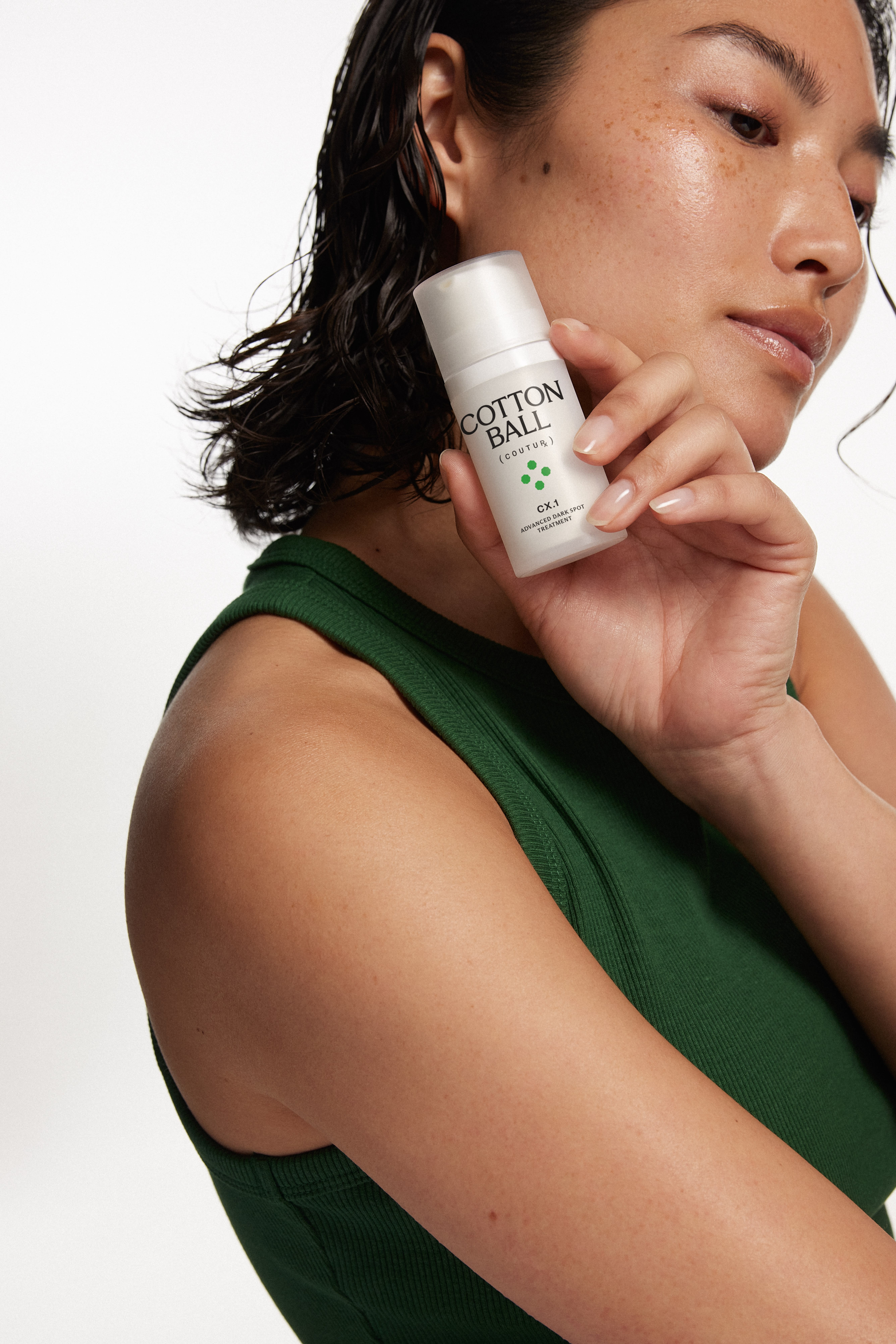
Melasma is stubborn. Our ingredients won't be stopped.
Fading and controlling melasma requires a fair amount of patience and a whole lot of diligence, from sticking with your treatment plan to practicing proper skin protection afterward. Here is a dermatologist-approved game plan.
Step #1: Begin a hydroquinone treatment
Prescription-strength hydroquinone is dermatologists’ go-to choice for treating melasma. It’s one of the few ingredients powerful enough to visibly fade excess pigmentation and restore a balanced skin tone.
Hydroquinone is a well-researched chemical compound that inhibits tyrosinase, a key enzyme in controlling skin’s production of melanin. By intercepting this process at the cellular level, hydroquinone can effectively lighten melasma. As the skin sheds darker cells to allow fresh cells to rise to the surface, your skin will gradually become more even toned.
Dermatologists often prescribe hydroquinone in conjunction with a retinoid to optimize results. The retinoid helps improve the penetration of hydroquinone while also increasing skin cell turnover to shed the darker cells.
One study found that participants who used a treatment of 4% hydroquinone in conjunction with 1% retinol saw significant improvement in mild to moderate melasma within 4 weeks, with up to 75% improvement in melasma severity by the end of the 24-week study.
Cottonball CX.1 Advanced Dark Spot Treatment delivers maximum skin-tone-improving benefits. It's an 8-week, targeted treatment that combines a customized dose of hydroquinone with the retinoid tretinoin, both in prescription concentrations.
All this said, it isn't advised to use hydroquinone when you're pregnant or breastfeeding. "The safest anti-pigmentation product during breastfeeding is azelaic acid," says Dr. Krathen.
Step #2: Add additional pigment-fading actives to your regimen
A topical steroid can further increase the efficacy of a hydroquinone treatment by reducing inflammation beneath the skin that can worsen melasma. Niacinamide and kojic acid can help break up excess melanin at the surface level of skin and prevent it from recurring.
Cottonball CX.1 Advanced Dark Spot Treatment contains niacinamide, kojic acid, and the corticosteroid fluocinolone. Research shows that a triple combination of 4% hydroquinone, 0.05% tretinoin, and an anti-inflammatory corticosteroid like fluocinolone is more effective at treating discoloration than using 4% hydroquinone alone.
Once you finish the 12-week CX.1 treatment, transition to a hydroquinone-free retinoid cream such as Cottonball VX.4 Daily Skin-Brightening Formula. It offers tretinoin to continue regulating skin cell turnover and help prevent melasma from returning, along with other tone-eveners like ascorbic acid (a stable form of vitamin C) and alpha arbutin.
As with hydroquinone, tretinoin is also not appropriate for use during pregnancy, so make sure to only use CX.1 after you've given birth and have finished breastfeeding.
Step #3: Switch to tinted sunscreen
Imagine spending 8 weeks treating your melasma, only to have it come right back because you skipped a dose of 'screen. Don't let all that effort go to waste.
Turns out, the key is a sunscreen that contains iron oxide, found primarily in tinted mineral sunscreen.
The proof: According to various studies—including a 2025 review—tinted sunscreens have shown significant protection against the recurrence of melasma. "Iron oxide has been shown to be more efficacious than mineral sunscreen without it for melasma treatment," explains Kavita Mariwalla, M.D. a double board-certified dermatologist and Mohs Surgeon and author of Cosmeceutical Compendium.
Even the slightest amount of unprotected sun exposure can trigger a resurgence of melasma, so stash sunscreen in your bag to dab on anytime you’re outside. And if you’re prone to above-the-lip melasma, reapply SPF to this area every 30 minutes when you’re at the beach, pool, or out in direct sunlight. Between eating, drinking, and sweating, sunscreen tends to get rubbed off the upper-lip region much faster than it does from the rest of the face.
Step #4: Consider changing your birth control
BC can have a variety of bodily side effects, from nausea to weight gain. Some people's skin isn't spared, either. If you developed melasma after going on oral contraceptives, they may be causing the condition to continue reappearing, making it harder for you to successfully treat it.
The melasma risk is much higher with combined oral contraceptives that include estrogen than progesterone-only contraceptives (about 15% vs less than 1%), says Dr. Krathen. But progesterone-only patients may develop cystic acne. In any case, discuss with your ob/gyn the best solution for you.
Step #5: Practice patience
It's a virtue, remember? There are several instances in which simply waiting things out can clear it up.
For example, we've talked about how the surge of estrogen that occurs during pregnancy can bring on melasma. But after you give birth and finish breastfeeding, your estrogen levels will drop back down, which may cause melasma to fade on its own. (And since you can’t use hydroquinone while pregnant or nursing, this may be your only option.)
Similarly, if you’re on hormonal birth control and switch to a different method of contraception, your melasma will often fade away over time. Though, it's worth repeating, it can flare up with sun exposure so—say it with us—always be sure to use a broad-spectrum SPF 30+.
Which Cottonball formula will best treat your melasma? Take this quiz to find out.
READ MORE: Your Ultimate Guide to Dark Spots and Hyperpigmentation


